
Think about the kind of visit you are planning before you sit down. A quick lunch may call for a straightforward burger and side, while an after-work meal may leave room for conversation, cocktails, and a slower look at the menu. Someone searching for best burgers midtown may find a useful starting point, but a ranking cannot account for your appetite, schedule, or cooking preference. Ask whether fries or another side come with the burger, whether substitutions carry an extra charge, and whether staff can accommodate an allergy. Clarifying those details early prevents a second round of questions after the order has gone to the kitchen.
The patty style affects the entire bite. A smash-style burger is generally made from a portion of beef pressed thin against a hot cooking surface, which can produce crisp, browned edges and a relatively slim center. A thicker patty offers a different texture, with more of the bite coming from the interior. Neither format is automatically superior. If you prefer a delicate bun-to-meat balance, a thinner patty may suit you; if you want a more substantial center, a thicker one may be preferable. The bun matters as well. A soft bun compresses easily, while a sturdier bun can better support cheese, pickles, and generous sauce.
Doneness is worth discussing because people sometimes use the same word to mean different things. A medium burger will not have the same texture as one cooked through, and a restaurant may limit the available options for ground beef. Ask the server what the kitchen can provide instead of assuming that every request is available. Browning on the surface is associated with the Maillard reaction, in which heat helps proteins and sugars develop deeper color and roasted flavors. A hot cooking surface and controlled moisture support that crust. The patty may also continue cooking briefly after it leaves the heat, so the texture at the table can differ slightly from the moment it was removed from the grill.
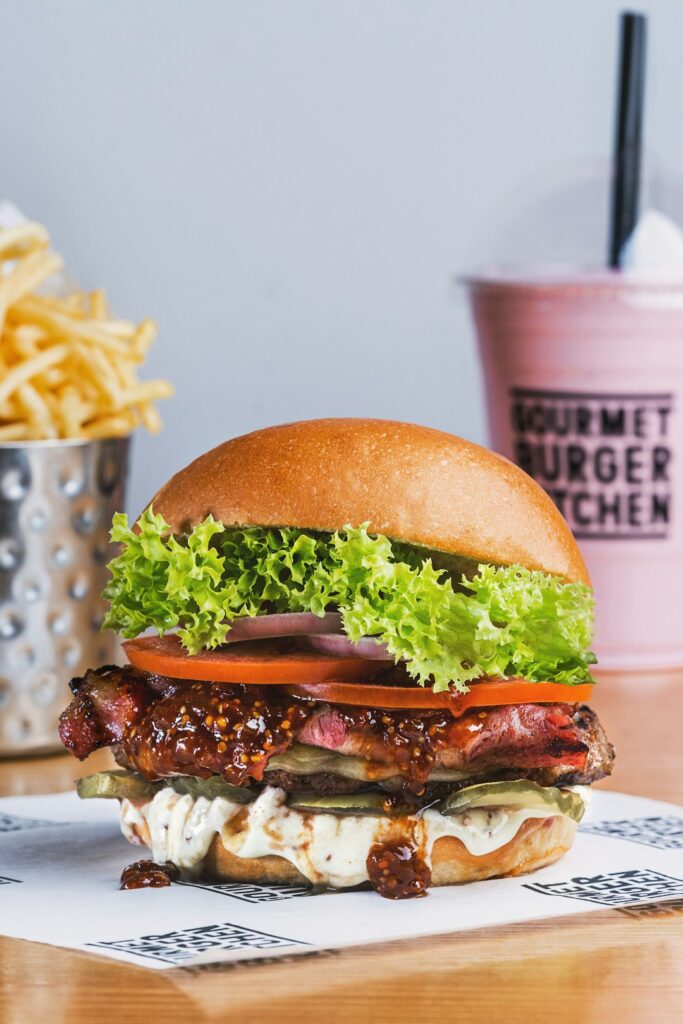
Toppings should work with the patty rather than turn the sandwich into an unstable stack. Pickles and other acidic ingredients can offset the richness of beef and cheese, while extra cheese or a creamy spread can make the meal feel heavier. Sauce placement matters too. A mayonnaise-based sauce is an emulsion, meaning ingredients that normally separate are held together in a smooth mixture. That lets it coat the bun evenly, although a generous amount can still migrate onto the plate. If you dislike dripping sauce, request it on the side or ask for a lighter amount. If heat, sweetness, dairy, or a specific ingredient concerns you, raise the question before ordering rather than trying to work around it at the table.
The room and beverage program may influence the meal as much as the burger itself. A visitor headed to a theater may value prompt service, a manageable portion, and a drink that does not slow the evening. Friends meeting on a Friday may care more about seating, conversation, and the option to stay after the food arrives. The Andy Warhol-themed setting adds visual character beyond the plate, while the menu may support a longer meal with drinks. Reviewing midtown burgers and cocktails beforehand can help you decide whether to keep the order focused or leave time for a beverage. If your group arrives at different times, tell the host or server early so the table plan is clear.
When the burger arrives, take a moment to check the order before adding ketchup or cutting it in half. Confirm that the requested patty style appears correct, the bun is intact, and the toppings are distributed instead of sliding into one wet pile. Ground meat should be handled and cooked according to the restaurant’s food-safety procedures, and anyone with a health concern should state it clearly to staff. A tall burger is not a test of technique. Use a knife and fork if that keeps the filling in place, or press the bun gently before lifting it. If cheese, a side, or a requested adjustment is missing, mention it promptly while the details are easy to verify.
A practical order depends on the purpose of the visit. For lunch between appointments, a familiar burger with a contrasting side keeps the meal direct and predictable. For an evening meeting, you might compare patty thickness, ask about the sauce, and add a cocktail only after confirming how much time remains. Keep the menu open on your phone if you are coordinating with coworkers, and note allergy questions before everyone starts ordering. Those small habits reduce rework, especially in a busy dining room. The right Midtown burger is the one that fits your preferred texture, appetite, timing, and tolerance for a messy or leisurely meal.