
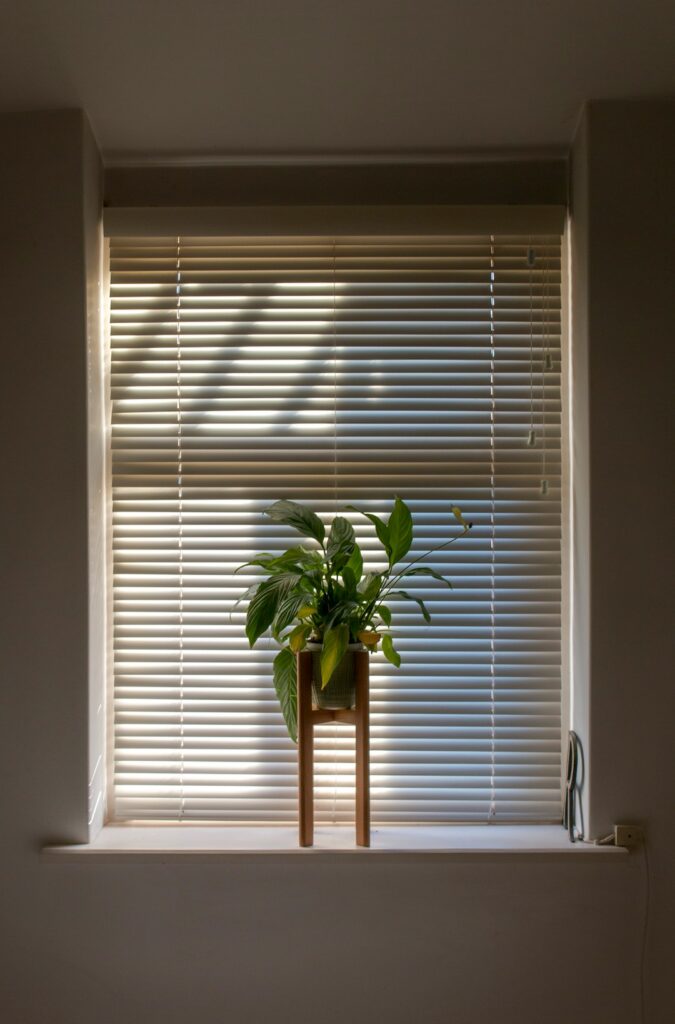

The first mistake was choosing a covering by colour alone. The fabric looked suitable in a sample, yet the finished blind did little for the hottest window because its size, position and operation had not been considered together. A blind that stops short of the frame can leave side gaps where sunlight and warm air still enter. A loosely fitted covering may also provide less useful insulation than expected. The better approach was to assess each opening, noting its direction, nearby furniture, daily glare and whether the blind would sit inside or outside the window recess.
The useful feature of honeycomb blinds is their cellular structure. Folded fabric forms connected pockets, or cells, that trap a layer of air between the room and the glass. Air is a poor conductor of heat, so this trapped layer can slow the transfer of warmth in either direction. That does not make a window completely heatproof, and performance depends on the fabric, fit and installation. The term thermal insulation simply describes this resistance to heat flow. In plain terms, the blind can help reduce the speed at which the room gains heat in summer or loses it in winter.
A second household showed why solar gain matters. Its west-facing dining area became glaring and warm in late afternoon, even when the thermostat was set comfortably. Solar gain means heat entering a room through sunlight, and the effect is often strongest on windows facing the morning or afternoon sun. The residents initially lowered the blind only after the room felt hot, which was too late to prevent much of that gain. A better routine was to close the blind before the harshest sunlight arrived, while still opening it when softer daylight was useful.
Fit also affects the result. An inside-mounted blind sits within the reveal, the recessed area around the window, and can give a neat appearance when the recess is deep and clear. An outside-mounted blind covers more of the surrounding frame and may reduce light escaping around the edges. Those edge spaces are commonly called light gaps. They are not always a fault, since moving fabric and operating hardware need clearance, but their size should be discussed where glare or privacy matters. A careful measure should account for handles, vents, architraves and the direction in which the blind will move.
The choice of operation deserves similar attention. A window opened frequently may need a blind that can be raised without interfering with the handle, while a tall or wide opening may suit a split arrangement so one section can be adjusted independently. In a bedroom, a more light-blocking fabric may be preferable; in a study, filtered daylight could reduce screen glare without making the room gloomy. For a broader look at window dressing options, compare how the blind will be used each day rather than relying only on a photograph or showroom sample.
Before ordering, check which windows create discomfort and when. Note morning chill, afternoon glare, condensation or privacy concerns, then ask for a measure and quote that considers those details. Condensation is moisture forming when warm indoor air meets a colder surface; a blind may alter the temperature near the glass, but it does not replace ventilation or solve every moisture problem. The sounder decision is to match the cellular design, fabric, mounting position and control method to each room. With that approach, honeycomb blinds become more than a decorative purchase: they are a considered way to make window comfort easier to manage.