
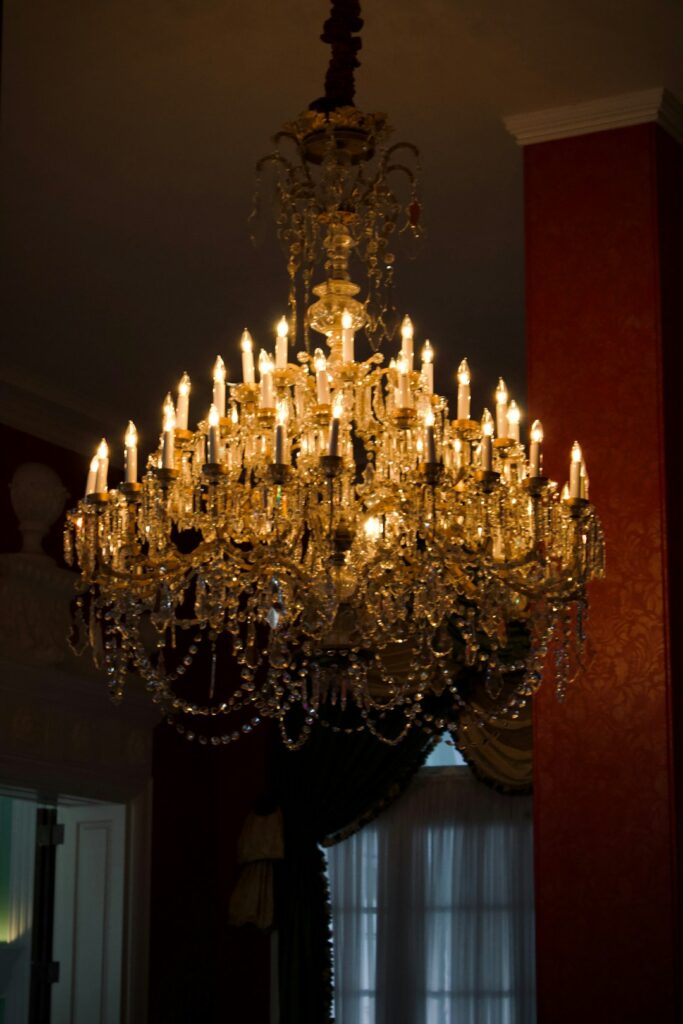

One misconception is that every piece sold as Murano glass has the same origin or degree of hand finishing. Genuine island production, work inspired by Venetian techniques and mass-produced glass are different things, so ask for clear information about provenance and construction. Hand-blown glass is formed by gathering molten glass on a blowpipe, while moulds can help create repeated shapes. Both approaches can produce attractive results, but they differ in variation and detail. A carefully described murano art glass chandelier should be assessed by its materials and workmanship, not by an Italian-sounding name alone.
Colour is another area where expectations can mislead. Transparent glass spreads a lighter, more open impression, whereas dense ruby, amber or black elements create stronger visual weight. Some pieces contain a coloured layer over clear glass, a technique often called cased glass. Others use aventurine, flecks of metallic-looking material that catch the light, or millefiori, patterned sections made from small coloured glass canes. These terms describe decorative methods rather than a guarantee of quality. Look at the chandelier with the room’s existing finishes in mind, because polished metal, painted walls and daylight can all change how the colours appear.
The size printed in a product description usually needs translating into the room. Diameter describes the width of the fitting, while overall drop describes the distance from the ceiling to its lowest point. In a dining room, a wide chandelier can suit a long table, but a large drop may obstruct sightlines. In a stairwell or entrance, a longer form may be intentional, provided people cannot brush against it. For example, a compact fitting above a round breakfast table may feel balanced, while the same fitting could look lost above a generous rectangular table. Measure the furniture and walking routes before choosing.
Brightness is not determined simply by the number of arms or bulbs. Lumens measure visible light output, while watts mainly indicate electrical consumption. A chandelier with many low-output lamps may provide softer illumination than a smaller fitting with brighter lamps. The shade of the glass matters too: clear sections transmit more light, while opaque or heavily coloured sections direct and filter it. Dimming depends on the lamps, dimmer and wiring being compatible, so this should be checked before purchase. A qualified electrician can also confirm the ceiling support and the correct connection for the fitting.
Maintenance rarely requires the dramatic polishing routine some owners expect. Glass should normally be allowed to cool, then dusted with a soft, dry cloth or a suitable gentle cleaner applied to the cloth rather than poured over the fitting. Metal finishes may need different care, and abrasive products can mark plating. Removable drops should be handled over a padded surface, since even sturdy glass can chip if it strikes a sink or worktop. When comparing an italian lighting collection, check how accessible the lamps and glass components are, not just how striking the chandelier looks when newly installed.
A chandelier does not need to dominate the whole interior to be authentic or effective. In a modern room, a restrained clear-glass design can connect with reflective surfaces without making the space feel ornate. In a period setting, coloured glass and curved arms may echo furniture and architectural details, though matching every finish can look staged. Consider the view from seated and standing positions, the daylight entering through windows and the shadows cast on the ceiling. The most successful choice is one that fits the room’s scale, supplies suitable light and offers details you will still value after the first impression fades.