
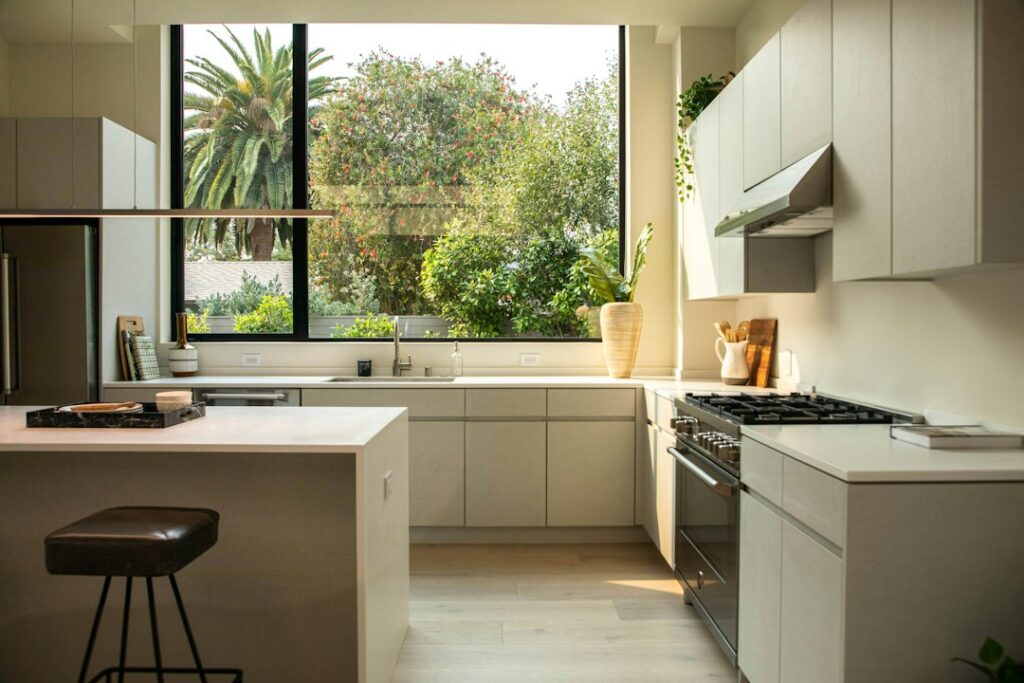

Divide the plan into practical zones before selecting equipment. Preparation needs a firm, washable counter with room for a board, ingredients, trays, and dishes waiting for the grill. Cooking space depends on the appliance and should not obstruct the main route. Serving belongs close to the dining area, while storage should keep tools and frequently used ingredients within reach. A refrigerator is useful only if its door can open without blocking the cook. Thinking in zones gives an outdoor kitchen a logical working sequence and exposes space conflicts before cabinets are ordered.
Fuel affects both cooking habits and the supporting layout. Gas heats quickly and allows direct adjustment, but the supply arrangement and cylinder location must suit the installation. Pellet equipment uses electricity as well as pellets and can provide controlled cooking with less constant tending. Wood and charcoal bring smoke and high heat, yet they require ash removal, dry storage, and closer attention during cooking. Electric appliances may be convenient where a suitable circuit is available, although their cooking character differs from live fire. Decide whether fast meals, smoke flavour, precise control, or reduced maintenance matters most before committing bench space.
Smoke and heat need a clear route away from people and buildings. Outdoor air movement can carry smoke towards windows, doors, or neighbouring properties, while a roof and side wall may hold it in the cooking area. A covered design should be assessed with the appliance position, openings, and usual wind direction in mind. Combustion uses oxygen and produces heat and by-products, so an enclosed space cannot be treated like an uncovered patio. Read the appliance installation manual before finalising a built-in grill or canopy. Its specified clearances and ventilation requirements take priority over a generic layout diagram.
The surrounding structure must tolerate more than occasional cooking. Countertops and cabinet finishes face moisture, grease, spilled drinks, temperature changes, and repeated scrubbing. Decking also needs to support the installed equipment and furniture without creating an unstable or difficult-to-clean surface. Heat transfer can warm a wall, screen, or cabinet beside an appliance even without direct flame contact. Keep the stated gaps around the cooker and use the materials specified for those locations. A timber privacy screen may look neat beside a smoker, but smoke residue, radiant heat, and limited access for cleaning can make that arrangement unsuitable.
Sort out services before the cabinet frames are fixed. List the expected electrical loads for refrigeration, lighting, ignition systems, outlets, and any electric cooking equipment, then have the supply assessed by a qualified electrician. Outdoor-rated fittings resist moisture under their intended conditions, but they still need suitable placement and protection from direct exposure. Plan drainage as well. A modest fall and washable surface can help water and spills move away from cupboards instead of collecting beneath them. Reserve defined storage for gas bottles, pellets, firewood, rubbish bins, and cleaning supplies. Checking these locations on the drawing prevents late changes and loose fuel bags after installation. For more outdoor kitchen planning advice, include maintenance access alongside meal preparation.
Test the layout at full scale before buying appliances. Cardboard boxes can represent a grill, refrigerator, sink, and workbench, while tape can mark cabinet edges and door clearances. Rehearse a lunch for six: one person unloads food, another opens the refrigerator, and a third carries plates to the table. Repeat the exercise with two people cooking while children move between the house and garden. If traffic crosses the hot zone, move the equipment rather than hoping everyone will adapt. Check the arrangement in daylight and after sunset, when shadows, glare, and missing task lighting may change how safely the counters can be used.
Budget for ownership as well as construction. Appliance price is only one part of the cost; fuel use, cleaning effort, replacement parts, weather protection, and service access affect the working life of the kitchen. A premium surface may be poorly suited to an exposed position, while a less elaborate finish can be practical under a proper cover. Match equipment to the number of meals you actually cook outdoors, and leave a route for removing a failed appliance without dismantling the whole counter. Keep the manuals, installation documents, measurements, and service details in one dry folder. That habit makes future repairs and replacements far less disruptive.